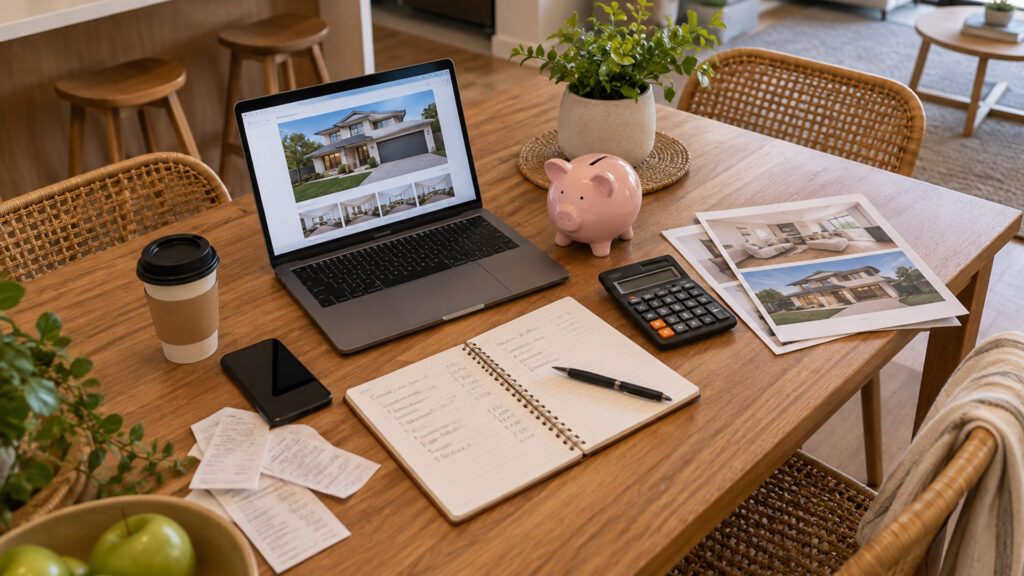
Many first home buyers feel hesitant when asked about their budget. It is common to assume that if you share your budget, a builder might simply adjust their pricing to match it. While this concern is understandable, it often leads to bigger issues later in the building process.
For custom homes in particular, not sharing your budget can create misalignment between your expectations and what is actually achievable.
Should You Tell Your Builder Your Budget?
The short answer is yes — but with the right context.
Sharing your budget is not about giving the builder an opportunity to increase costs. It is about providing a clear framework so they can guide you toward options that are realistic and achievable.
Without this information, builders are often working without clear boundaries, which can lead to designs that exceed what you are comfortable spending.
Why Do People Hesitate to Share Their Budget?
Many people believe that revealing their budget gives the builder an advantage.
This usually comes from:
- Fear of being overcharged
- Lack of transparency in the industry
- Previous experiences or assumptions
However, in most cases, builders rely on your budget to understand how to structure the project — not to maximise margins arbitrarily.
What Happens If You Don’t Share Your Budget?
Not sharing your budget can lead to unintended consequences.
For example:
- You may proceed with designs that are not financially feasible
- You may invest in plans, approvals, and documentation without knowing if the build is achievable
- You may need to redesign or adjust after already committing time and money
This can result in delays, additional costs, and frustration.
How Builders Actually Use Your Budget
Your budget acts as a guide, not a target.
Builders use it to:
- Recommend suitable design options
- Adjust materials and finishes
- Structure the build in a way that aligns with your financial position
This allows for a more practical and informed approach rather than working through assumptions.
Why Budget Transparency Helps With Custom Homes
Custom homes are not fixed products — they are built based on your preferences and requirements.
Because of this:
- Costs can vary significantly depending on design choices
- There is no single “standard” price
- Early alignment is critical
By sharing your budget, you allow the builder to tailor the process to what is realistically achievable.
What Does a Consultative Process Look Like?
When a budget is clearly communicated, the process becomes more collaborative.
Instead of guessing, you can:
- Ask what is possible within your budget
- Explore different design options
- Adjust expectations early
This creates a more structured approach and reduces the likelihood of surprises later.
Why This Decision Affects the Entire Building Process
Budget clarity is not just about the early stages — it influences the entire project.
Without it:
- Decisions are made without financial context
- Adjustments happen later instead of earlier
- Costs can escalate unexpectedly
With it:
- Decisions are grounded in reality
- Planning becomes more efficient
- Outcomes are more predictable
Many People Avoid This — And It Costs Them Later
Avoiding the budget conversation may feel like a way to protect yourself, but it often leads to the opposite outcome. When expectations are not aligned early, it increases the risk of wasted time, effort, and money.
Conclusion
Sharing your budget with a builder is not about giving up control — it is about creating clarity.
For first home buyers, especially those building custom homes, this step helps ensure that the design, planning, and construction process aligns with what is actually achievable.
Rather than avoiding the conversation, approaching it with the right understanding can lead to better decisions and a smoother building experience.
If you are planning your first build, understanding how your budget aligns with your options can help you make more informed decisions.
See Other Blogs: High Return Property Investing: Is the Extra Risk Actually Worth It?
TL;DR
- Many people avoid sharing their budget due to fear of overpricing
- Not sharing your budget can lead to unrealistic designs
- Builders use your budget to guide decisions, not inflate costs
- Custom homes require early alignment between budget and design
- Transparency can reduce delays, costs, and rework
Frequently Asked Questions
Yes. Sharing your budget helps builders recommend realistic options and align the project with your financial position.
Not typically. Builders use your budget as a guide to structure the project rather than simply increasing costs.
You may end up with designs or plans that are not financially feasible, leading to delays or additional costs.
Custom homes vary in cost depending on design and materials, so budget helps guide what is achievable.
As early as possible, ideally before design and planning stages begin.
Disclaimer
This is general information only. This is not financial advice. Any examples are illustrative and may not suit your personal circumstances.